|
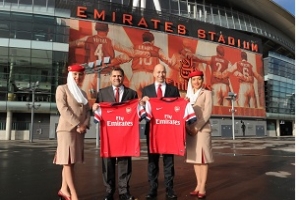
Emirates, one of the world’s fastest growing international airlines, and Arsenal Football Club have today announced a new £150 million deal which grants the airline a five year extension to their shirt partnership with the Club until the end of the 2018/2019 season.
As well as being one of the biggest deals ever struck in the game, the agreement, worth £30 million a year for five years, extends and deepens one of the strongest and most recognisable partnerships in sport.
"Arsenal’s strong appeal around the globe and ambitious approach to the game parallel our own approach to business, making them a valuable partner for our brand," said His Highness (HH) Sheikh Ahmed bin Saeed Al Maktoum, Chairman and Chief Executive, Emirates Airline and Group. "We continue to see immeasurable value in our global sports sponsorships and our sponsorship with Arsenal is no different. The Club has been an important enabler of the growth of our business over the last decade and we are confident this will continue as part of our extended deal.
“This partnership remains a perfect combination of two truly global brands. Through our global network and carefully selected sports sponsorships Emirates is able to unite and engage fans, and coupled with Arsenal’s world-wide fan following this makes for a strong match,” added HH Sheikh Ahmed.
As part of the deal Arsenal’s home will continue to be known as Emirates Stadium up to 2028.
The Emirates brand will also continue appearing on the front of Arsenal’s playing and training kits and the new agreement contains a number of marketing rights, which come into effect immediately, to ensure Emirates can engage with Arsenal fans in the UK and abroad.
"This is an exciting day for Arsenal Football Club and all our supporters," said Arsenal Chief Executive Ivan Gazidis. "This agreement is a testimony to Arsenal’s approach and to the capabilities we have developed in recent years as well as the strength of our partnership with Emirates.
“The original deal with Emirates was a key facilitator of our move from Highbury and this next phase of our relationship will be just as critical to keep us at the top of the game in England and Europe.
“Emirates is the perfect partner for Arsenal and we are delighted to have agreed a new partnership. Emirates is a world class brand and by flying to over 120 destinations across six continents has a truly global reach. This reach will play an important role in our own ambitions to further extend the depth of our following around the world. The fact this partnership will continue for many years to come underlines how much both organisations value and benefit from the relationship.”
The new agreement was formally concluded today at Emirates Stadium by Arsenal Chief Executive, Ivan Gazidis and Emirates Divisional Senior Vice President, Corporate Communications, Boutros Boutros.
As part of the partnership agreement the Arsenal soccer school in Dubai, which launched in 2010, will also continue. Since the school opened over 4000 youngsters have trained there and are often visited during the term by Arsenal’s first team players.
Emirates first signed its sponsorship agreement with Arsenal in 2004, providing the airline with naming rights to the stadium until 2021 and a shirt sponsorship that began in the 2006/2007 season.
Aside from European football club sponsorships, Emirates is also an Official Partner of the FIFA World Cup™, the Official Airline of a number of golf tournaments internationally and supports a range of high-profile horse racing, tennis, rugby, sailing and cricket events across the globe. | 









.jpg)

.jpg)






.jpg)

.jpg)

